.gtranslate_wrapper

Understanding the Working Principle of Laser Cutting Technology

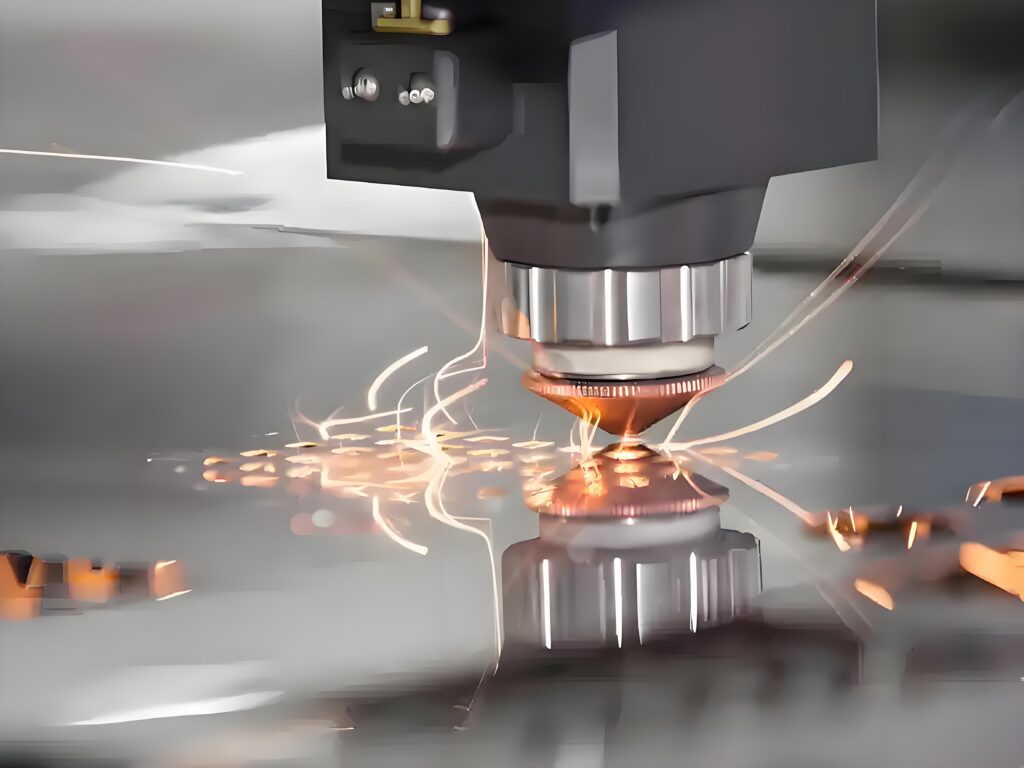
Laser cutting has become one of the most advanced and efficient methods of cutting materials in various industries. Whether you’re in the automotive, textile, or electronics industry, laser cutting technology provides the precision, speed, and flexibility needed to create high-quality products. In this blog, we’ll explain the working principle of laser cutting technology in a way that answers common customer questions and clarifies how it works.
What is Laser Cutting?
Laser cutting is a non-contact cutting process that uses a laser beam to cut or engrave materials. The laser beam is concentrated into a small, intense point that generates a large amount of heat, which melts, burns, or vaporizes the material to create an edge.
Laser cutting is a highly precise and efficient process that allows for intricate designs and patterns to be created with minimal material waste. It’s especially useful for cutting metals, plastics, fabric, leather, and other materials with complex shapes and fine details.
How Does Laser Cutting Work?
- Laser Beam Generation
The process begins with a laser source, typically a CO2 laser or fiber laser, which generates a focused laser beam. This beam is then directed through a series of mirrors or optical fibers. - Focusing the Laser
The laser beam passes through a focusing lens, which narrows and concentrates the beam to a small point. The focus of the laser is what makes the cutting process so accurate. The intensity of the focused beam increases as it shrinks, allowing it to melt or vaporize material. - Material Interaction
The laser beam is directed onto the material to be cut. The material absorbs the concentrated heat from the beam, causing it to melt, burn, or vaporize. The cutting process depends on the material’s type, thickness, and how it reacts to the laser’s heat. The laser beam moves along the material following the programmed path, cutting through the material. - Assist Gas
To improve the cutting process, assist gas (such as oxygen, nitrogen, or air) is blown along the cutting path. The gas helps to blow away molten material, cool the cutting area, and even assist in the combustion process (especially for cutting metals like steel). The choice of assist gas can impact the cut quality and speed. - Finished Cut
As the laser continues to cut along the programmed path, a clean, precise edge is produced. Laser cutting can be done in both straight lines and curved patterns, allowing for intricate designs. Once the cutting is complete, the material can be removed and further processed, depending on the application.
Why Choose Laser Cutting?
- High Precision
One of the biggest advantages of laser cutting is its exceptional precision. The focused laser beam allows for fine cuts with a tolerance of just a few microns. This is especially beneficial for small parts or intricate designs. - Minimal Material Waste
Unlike traditional cutting methods that require larger tools and may result in excess material waste, laser cutting uses a narrow cutting kerf (the width of the cut), which minimizes waste and maximizes material usage. - Versatility in Material Handling
Laser cutting is suitable for a wide variety of materials, including metal, wood, plastics, fabric, stone, and even rubber. The laser settings can be adjusted depending on the material, making it highly versatile. - Faster Production
Laser cutting machines operate at high speeds and can produce cuts much faster than traditional cutting methods. This makes it ideal for mass production and high-volume jobs where quick turnaround is essential. - Low Mechanical Wear
Since the laser doesn’t physically touch the material, there’s no wear and tear on the machine’s cutting tools. This reduces the cost of maintenance and ensures consistent performance over time.
Common Questions and Answers
Q: Can laser cutting work on any material?
A: Laser cutting is highly versatile and can work on most materials, but some materials require specific lasers or settings. For example, CO2 lasers are great for wood and plastics, while fiber lasers are better suited for metal materials like stainless steel and aluminum.
Q: Is laser cutting environmentally friendly?
A: Yes, laser cutting is considered environmentally friendly compared to traditional methods. The process produces less waste, and the precision allows for better material utilization. Additionally, the absence of physical cutting tools reduces the need for replacements and disposal of used tools.
Q: How precise is laser cutting?
A: Laser cutting provides exceptional precision, often down to ±0.1mm or better. The fine control of the laser beam allows for detailed and intricate cuts with high accuracy.
Q: Is laser cutting suitable for large-scale production?
A: Absolutely! Laser cutting machines are designed to handle both small batch production and large-scale production. With automation and fast cutting speeds, laser cutting is ideal for industries like automotive manufacturing, aerospace, and fashion, where high volumes of parts are required.
Laser cutting technology is a powerful, efficient, and highly precise method of cutting a wide range of materials. Whether you’re cutting metal, fabric, plastics, or more, the laser cutting process offers unparalleled accuracy, speed, and flexibility. By understanding the working principle of laser cutting, you can better appreciate its advantages and how it can improve your production processes.
If you have any more questions or are looking for a laser cutting machine for your business, feel free to contact us today! Our team at F&E Laser Technology is here to provide you with the best solutions for all your cutting needs.